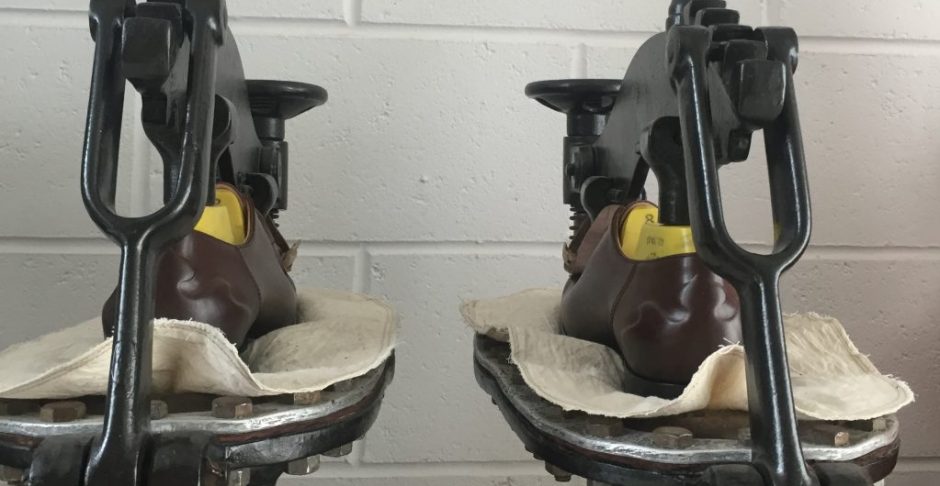
As part of the PG Cert ‘Theories, Policies and Practices’ unit, we are tasked with delivering a short microteach session using ‘Object Based Learning’. I had come across the term ‘Object Based Learning’ earlier through a colleague who was very enthusiastic about it. This colleague had finalised the PG Cert program earlier and wanted to integrate it into our course curriculum. I had started reading into it and discovered that “Interaction with artefacts deepens students’ learning” (Schultz 2012, p.185).
For this reason, I was looking forward to the guest lecture by Dayna Tohidi on Object-based Learning. Dayna introduced Object Based Learning as “an active and experiential pedagogy that supports the student experience of learning through objects” (n.d.). She also introduced several frameworks, most notably, for me, the framework by Jules Prown. I was drawn to Prown’s method because of the simplicity of its three stages: Description, Deduction, and Hypothesis. As object-based learning is still relatively new to me as an educator, having a clear and accessible structure made me feel more confident experimenting with this approach in my teaching.

Description
The framework starts with describing the object. I can imagine this being an accessible starting point for all students, allowing all learners to begin engaging with the activity regardless of their academic level or prior knowledge. By simply following their senses, students can gather a rich amount of information through careful observation.
Deduction
This is where the exercise starts to become less descriptive, and more interpretive, where students can draw their own conclusions based on their own observations. Rather than aiming for “correct” answers, emphasis could be placed on reasoning and justification, allowing room for different personal interpretations.
Hypothesis
At this stage, speculation can give way to imaginative thinking and creativity, where students can explore broader meaning and contexts surrounding the object. Particularly as an exercise for design inspiration, this approach could lead to meaningful outcomes.
References
Schultz, D. (2012) Three-dimensional learning: exploring responses to learning and interacting with artefacts. In: Jandl, S.S. and Gold M.S. (eds.) A handbook for academic museums, exhibitions and educators. Edinburgh: MuseumsEtc
Tohidi, D. (n.d.) Introduction to Object-based Learning. UAL PG CERT Object-based Learning Slide deck. Available at: https://ual-moodle-sitedata.s3.eu-west-2.amazonaws.com/e7/ca/e7ca102a17330b6e25da9503fc1083d57fb6da62?response-content-disposition=inline%3B%20filename%3D%22Introduction%20to%20Object-based%20Learning%20-%20slide%20deck.pdf%22&response-content-type=application%2Fpdf&X-Amz-Content-Sha256=UNSIGNED-PAYLOAD&X-Amz-Algorithm=AWS4-HMAC-SHA256&X-Amz-Credential=AKIA2PCH3OG65JHUZNKL%2F20260207%2Feu-west-2%2Fs3%2Faws4_request&X-Amz-Date=20260207T114854Z&X-Amz-SignedHeaders=host&X-Amz-Expires=21546&X-Amz-Signature=dafe92eea9bd7da52cfa43e7dfdb32efcfd40f1e7cf10aef81ac6b6f49857499 (Accessed at: 07 February 2026)