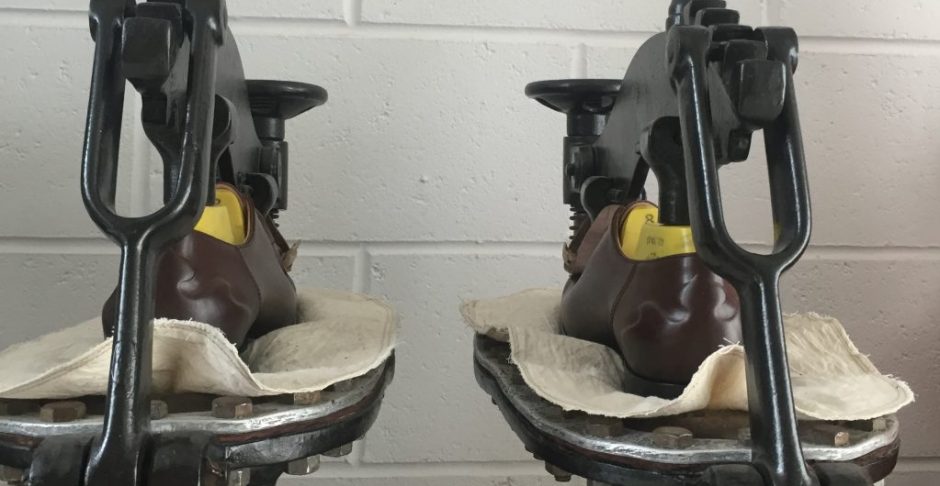

Dutch Clogs
Bikker, D. (2026) Dutch Clogs [Photograph]
Designing the session
Designing my microteaching session coincided with planning a session for my students on ‘Object-Based Learning’ (OBL). I decided to use the microteaching session as a pilot to test the method and identify any adjustments that might be needed. The subject I had chosen for my OBL session was Dutch Clogs. This topic was arguably cliché, given my specialism in footwear and my Dutch heritage; however, rather than shy away from the subject, I deliberately leaned into it. In my teaching practice, I often draw on my own cultural background to foster a more open and authentic learning environment, and to reduce hierarchical distance between myself and my students. In pedagogical terms, this approach aligns closely with Geneva Gay’s concept of Culturally Responsive Teaching (Gay, 2018), which emphasises the importance of integrating cultural knowledge and lived experience into the learning process.
Session Plan
I had organised the OBL exercise in my microteach session into three sections, according to the method by Jules Prown, as explained in the guest lecture by Dayna Tohidi (n.d.): Description, Deduction and Hypothesis. Having two pairs of Dutch clogs in the middle of the table, one adult size and new, and one kid’s size and worn, I encouraged my peer group to observe, hold and smell the objects and even trying them on.
Trying on Clogs
Harris, T. (2026) Trying on Clogs [Photograph]
This started energetic description and discussion amongst my peers whilst passing around the 4 clogs.
Clog Discussion
Miller, S. (2026) Clog Discussion [Photograph]
During the following Deduction section, more of the context of the Dutch Clog was discovered and the Hypothesis section prompted many scenarios regarding the historical, social and geographical context of the clog. After this session, I showed visuals on screen that illustrated and grounded these hypotheses.
Peasants Planting Potatoes
Van Gogh, V. (1884) Peasants Planting Potatoes [Painting] Available at: krollermoller.nl
The concluding slide prompted discussion about the current state of the clog (see below image) and its potential evolution beyond its reputation as ‘old-fashioned’ footwear.
Klompen
Welkoop (2026), Klompen. Available at: https://www.welkoop.nl/kleding/schoenen/klompen (Accessed: 31 January 2026)
Learning Outcomes
The two main learning outcomes that I was aiming for with this session were:
- To critically engage with the materiality, function, and cultural significance of an object.
- To foster a deeper understanding of how objects reflect historical narratives, social values and cultural identities.
As an exercise for footwear design students, these learning outcomes aim to develop their critical and analytical thinking, enabling them to design thoughtfully and responsibly for the future.
“Reverse engineering the learning”
The feedback I received from my peers was positive and encouraging. One comment that particularly resonated with me was the observation that I had been “reverse engineering the learning”. I had not consciously framed my approach in this way; however, upon reflection, this description surprisingly captures my process quite accurately. Although my approach was intuitive, the feedback helped me recognise that my planning was more intentional than I had assumed.
Microteaching Feedback
Bikker, D. (2026) Microteaching Feedback [Photograph]
Reflection
In practice, the Description and Deduction section blended together, which resulted in a more natural form of discussion. Whilst having conversations with each other, we could analyse each other’s findings at the same time.
I was most apprehensive about how the observation and dialogue would unfold. I worried that there might not be enough participation to generate meaningful observations and subsequent analysis. Fortunately, during the session, my peers were highly engaged and eager to discuss their findings. I anticipate that in a session with students, I may need to provide more prompting to help unpack observations and guide analysis. I will plan for this in my student session.
References
Gay, G. (2018). Culturally responsive teaching: Theory, research, and practice (3rd ed.). Teachers College Press.
Tohidi, D. (n.d.) Introduction to Object-based Learning. UAL PG CERT Object-based Learning Slide deck. Available at: https://ual-moodle-sitedata.s3.eu-west-2.amazonaws.com/e7/ca/e7ca102a17330b6e25da9503fc1083d57fb6da62?response-content-disposition=inline%3B%20filename%3D%22Introduction%20to%20Object-based%20Learning%20-%20slide%20deck.pdf%22&response-content-type=application%2Fpdf&X-Amz-Content-Sha256=UNSIGNED-PAYLOAD&X-Amz-Algorithm=AWS4-HMAC-SHA256&X-Amz-Credential=AKIA2PCH3OG65JHUZNKL%2F20260207%2Feu-west-2%2Fs3%2Faws4_request&X-Amz-Date=20260207T114854Z&X-Amz-SignedHeaders=host&X-Amz-Expires=21546&X-Amz-Signature=dafe92eea9bd7da52cfa43e7dfdb32efcfd40f1e7cf10aef81ac6b6f49857499 (Accessed at: 07 February 2026)