Session/artefact to be observed/reviewed: Design Sketchbook Review
Size of student group: 11 students
Reviewee: Daphne Bikker
Reviewer: Alice Karsten
Part 1: Reviewee to complete
What is the context of this session/artefact within the curriculum?
This session marks the halfway point of the 8-week ‘Future Footwear’ unit. The unit begins by selecting an Object and Process as a starting point, which students then analyse and use as inspiration to develop a cohesive footwear collection.

Example of an Object (punching bag) and Process (embellishment / beading)
Gibson, J. (2018) If I Ruled The World [re-purposed punching bag, glass beads, artificial sinew, and steel]. Available at: https://art.seattleartmuseum.org/objects/47809/if-i-ruled-the-world (Accessed 5 February, 2026)
Gibson, J. (2015) Various Works [re-purposed punching bag, glass beads, artificial sinew, and steel]. Available at: https://www.instagram.com/jeffrune/ (Accessed 5 February, 2026)
Gibson, J. (2015) I Put A Spell On You [re-purposed punching bag, glass beads, artificial sinew, and steel]. Available at: https://smarthistory.org/jeffrey-gibson-im-not-perfect/ (Accessed 5 February, 2026)
By this stage, students are expected to have begun sketching their ideas. This session is designed to support the further development of these concepts, offering guidance, feedback, and suggestions for additional research or experimentation for those who may feel stuck or need fresh direction.
Also, during this session, some examples of ‘Design Presentation Sheets’ will be shown to students as examples of good practice.
How long have you been working with this group and in what capacity?
This group forms the Year 2 of the BA (Hons) Cordwainers Footwear course. I have been teaching them since their Year 1 in limited capacity, and this academic year more frequently. I am unit lead on the ‘Future Footwear’ unit.
What are the intended or expected learning outcomes?
The outcomes of this session are:
- To support students in advancing their work on the ‘Future Footwear’ unit, guiding them towards establishing a clear connection between their chosen Object/Process and a final footwear outcome. This is through 2D sketching and 3D experimentation.
- To develop students’ understanding and skills in creating effective Design Presentation Sheets, ensuring their ideas are communicated clearly and professionally.
What are the anticipated outputs (anything students will make/do)?
- 2D Sketching
- 3D Experimentation
Are there potential difficulties or specific areas of concern?
This unit presents quite a complex brief, so understanding exactly what is expected of students will be challenging. I also want to encourage students to take ownership of the brief, exploring their own creative directions. It will be challenging to make them feel confident to take risks, experiment, and not be afraid of making mistakes, as this is a vital part of the design and learning process.
How will students be informed of the observation/review?
I informed the students in person during an earlier session and followed up with an email inviting any objections. No objections were received.
What would you particularly like feedback on?
Happy to hear about any ways I could improve my session.
How will feedback be exchanged?
Through email.
Part 2: Reviewer to note down observations, suggestions and questions.
Structure of the session
Daphne introduced the session and gave some examples of how to display their work through the ‘Design Presentation Sheets’. She proceeded to go around the class while the students were working and talked to the students about their work and where they were at. She gave advice on what to do to develop their work further.
Observations
I think that the mix of a taught and more informal one-to-one support is really effective.
After the introduction daphne went around the class giving advice that was productive and assists the students in the problem solving required for their projects. Probing questions were asked about the function and form of the students’ shoe designs. Prompting them to think about their designs.
Daphne gives the students a lot of agency and autonomy in their making which I think is very beneficial to their work. I think that it has fostered a good working environment for the students where they feel both supported and independent. They feel comfortable with working in front of each other and Daphne. She is good at keeping the students motivated and on task.
It was fascinating to see this insight into the design process of making shoes and all the considerations made when designing the shoes.
Suggestions
It would be interesting to hear from the students what they thought worked well or needed more work with the ‘Design Presentation Sheets’
Questions
Do you feel like you give a lot of pastoral support within your role?
Part 3: Reviewee to reflect on the reviewer’s comments and describe how they will act on the feedback exchanged.
It is incredibly valuable to receive feedback on my teaching, as it provides a completely different perspective on my practice. It is particularly helpful when this feedback is delivered immediately after a session, allowing me to reflect and respond while the experience is still fresh and make meaningful adjustments straight away. Hearing from someone who is not directly attached to the course also brings an impartial and objective viewpoint, which makes the insights even more constructive and impactful.
I am pleased to read that the balance between structured teaching and informal one-to-one support was considered effective. I consciously aim to strike the right balance between more academic, formal content and a supportive, informal approach. When sessions become too formal or content-heavy, I often notice that focus and engagement can begin to decline. In my experience, delivering material in smaller, more manageable segments tends to be more effective.
Through informal teaching moments, I aim to create an environment in which students feel comfortable and confident enough to perform at their best. I am also mindful that some students may feel nervous when interacting with a tutor, and I try to foster an atmosphere that reduces this barrier and encourages open dialogue.
Problem solving might just be the most fun part of my job. I love a challenge! This brief, in particular, has been challenging due to its complexity and layered requirements. Many students initially felt overwhelmed, unsure of where to begin or how to navigate the process. It’s encouraging, however, to see them actively engaging with the brief and gradually finding their footing. Watching their confidence build as they move through the footwear design process has been both reassuring and exciting.
I often aim to mimic the learning environment to an industry environment. Design often happens in teams, through collaboration, so I really do try to encourage peer feedback. I emphasise that my opinion is just one of many and that my opinion doesn’t necessarily weigh more than another’s. What matters most to me is that students learn to trust their own judgement, and build the confidence to follow their instincts while remaining open to constructive input from others.
The suggestion to hear more from the students on what worked well or need more work is a brilliant one. I agree that student feedback is very valuable and that I could do more to actively prompt and facilitate it. Of course, we have the CSS and NSS surveys (n.d.), but these only happen once every academic year. More informal feedback opportunities could be added. This is something I will try to develop over time.
In answer to your question regarding pastoral support: Absolutely! Design often stems from personal experience and perspective, so the creative process naturally moves in and out of students’ personal worlds. Because of this, I remain mindful that what happens beyond the classroom can shape what happens within it. I aim to make myself available for pastoral support and try to read between the lines, trying to recognise when a student may be facing challenges. Creating a supportive environment where they feel seen and understood is just as important as guiding their creative development.
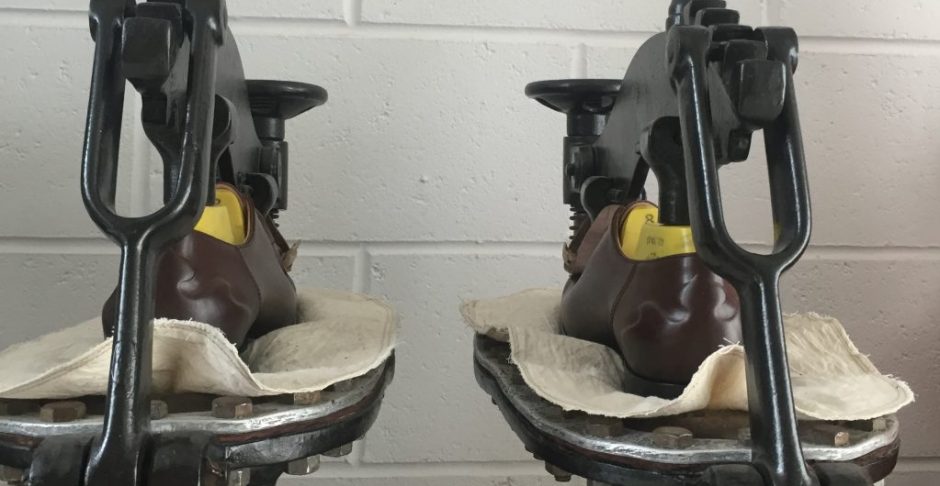
Alice, thank you for your feedback! It was great having you around and being able to geek out over the specialist materials and machinery.
References
www.thestudentsurvey.com. (n.d.). The National Student Survey. [online] Available at: https://www.thestudentsurvey.com/ (Accessed 19th March, 2026)